Buyer Brokerage Agreements in Port St Lucie can feel unfamiliar if you bought a home before 2024. You might be thinking: “Wait, I bought homes before and never had to sign this.”
We hear that a lot.
If you bought a home before 2024, the home search may feel different now. One of the biggest changes is that buyers are often asked to sign a written agreement with their real estate agent before touring homes.
That can feel strange at first.
Most buyers are not upset about having an agent help them. They are surprised because the agreement brings the commission conversation to the beginning of the process instead of later.
That is the part worth slowing down for.
A Buyer Brokerage Agreement explains who is representing you, what help you are receiving, how long the agreement lasts, and how the buyer agent compensation works.
The goal is simple: before we open doors, you should know who is helping you, what you are signing, and how the money side may be handled when you write an offer.
Let’s walk through it.
The agreement is not meant to trap you.
It is meant to make the working relationship, the services, and the money conversation clear before the home search gets emotional.
Why Buyers Are Asked to Sign Before Seeing Homes
Many buyers are now asked to sign a written buyer agreement before touring a home with a real estate agent. This applies to many in-person showings and live virtual tours.
The agreement is not supposed to be a surprise document handed to you at the front door or because you click a button on a portal.
It should be part of a clear conversation before the home search begins.
Before you start touring homes with us, we want you to understand:
- What type of agreement you are signing
- Whether it is for one property, a short time window, or a longer relationship
- What services we are providing
- How long the agreement lasts
- Whether the agreement is exclusive or non-exclusive
- How buyer agent compensation works
- What choices you may have when writing an offer
This conversation helps everyone slow down before the emotion of a showing takes over.
Because once you walk into a house and start picturing your furniture, your coffee maker, and where the dog bed goes, it gets harder to read paperwork with a clear head.
What a Buyer Brokerage Agreement Actually Does
A Buyer Brokerage Agreement is a written agreement between you and the real estate brokerage helping you buy a home.
It explains the working relationship.
Depending on the situation, the agreement may cover one property, a short showing window, or a longer home search. That is why the details matter.
Before signing, you should understand what the agreement covers and what it does not cover.
A good conversation should answer questions like:
- Are we looking at one home or starting a serious home search?
- How long does this agreement last?
- Can I work with another agent during this time?
- What happens if I find a home online?
- What happens if I visit an open house?
- How is the buyer agent fee handled?
- Can the seller help pay that fee?
- What happens if the seller does not agree to pay it?
You should not feel rushed through those questions.
This is one reason we prefer to talk before showings whenever possible. It gives you space to ask questions before you are standing in a driveway trying to unlock a door, review a form, and decide if you like the kitchen at the same time.
That is not exactly the calmest way to make a decision.
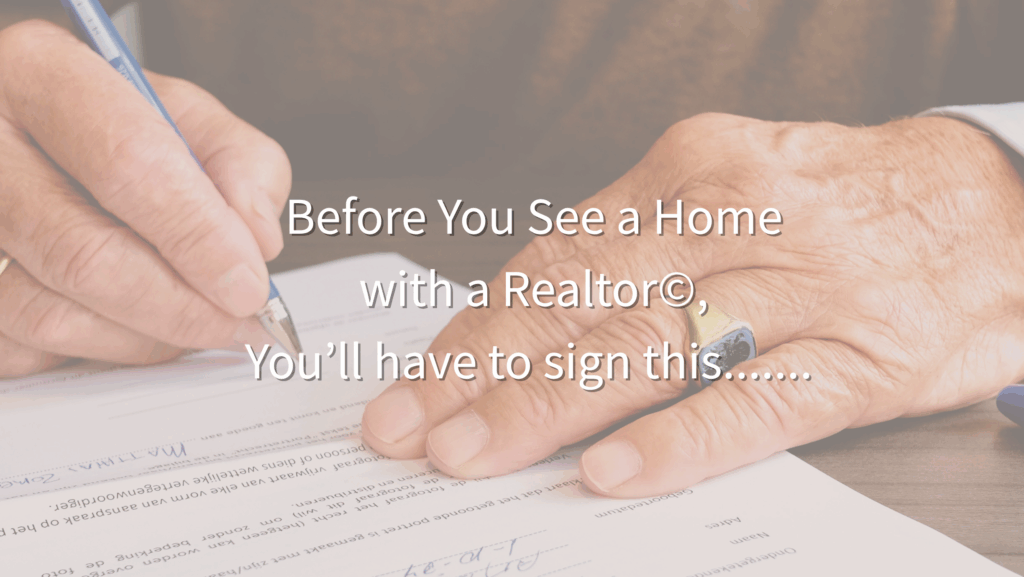
Does Signing a Buyer Brokerage Agreement Mean I Have to Pay the Commission?
This is usually the part that makes buyers stop and ask more questions. And that is fair.
For many years, buyers often heard something like, “The seller pays the commission.” That made the process sound simple.
The reality was always a little more layered than that, but most buyers did not have to think about it at the beginning of the home search.
Now the conversation happens earlier.
A Buyer Brokerage Agreement must explain how the buyer’s brokerage may be paid. That fee is not set by law. It is not the same in every transaction. It is something that should be discussed before you start touring homes.
That does not automatically mean you are writing a check for the full buyer agent fee at closing.
It means the compensation conversation is now written down before we begin.
Here are a few ways this may work.
- The seller may offer to pay a buyer agent fee.
- The buyer may ask the seller to pay it as part of the offer.
- The seller may agree to pay some of it.
- The seller may say no.
- The buyer may decide to cover some or all of it.
- The buyer may decide that a different home or a different offer strategy makes more sense.
The important part is that you should know the options before you write an offer. That is why we talk about it upfront. We do not want you to fall in love with a home, start packing in your mind, and then discover a money issue that should have been explained earlier.
Buying a home already has enough surprises. The agreement should not be one of them.
Can We Ask the Seller to Help Pay the Buyer Agent Fee?
Yes, in many cases we can ask.
When we write an offer, we can often request that the seller contribute toward the buyer agent fee, just like we may ask for other terms in the offer.
But it is still a negotiation.
A seller can agree, counter, or decline.
That is why the home, the price, the market, and the seller’s motivation all matter.
For example, if a home has been sitting on the market, the seller may be more open to helping with buyer costs.
If a home is priced well and has several interested buyers, the seller may be less flexible.
If the purchase price already feels tight because of appraisal concerns, there may be limits to how much can be built into the offer.
This is not one-size-fits-all.
That is why we look at each property before we decide how to write the offer. Our job is to help you understand the possible paths before you make a decision.
Sometimes the cleanest path is asking the seller to pay the buyer agent fee.
Sometimes the better path is adjusting the offer price, asking for a seller concession, or choosing another home where the full numbers work better.
The goal is not to force one answer. The goal is to help you see the full picture before you move forward.
Why This Conversation Happens Before We Tour
This conversation can feel early. We understand that. Most buyers want to see the house first, then talk about paperwork later. That feels normal, especially if that is how you bought a home years ago.
But the problem is that the home search gets emotional fast.
You may start by saying, “We are just looking.” Then the right kitchen shows up. Then the backyard works. Then the location feels right.
Then you are asking, “What do we need to do to make an offer?” That is not the best time to discover how the working relationship works or how the compensation section reads.
Before we tour, we want you to understand the agreement enough to make a calm decision.
You do not need to become a real estate contract expert.
You do not need to memorize every paragraph.
But you should understand what you are signing, how long it lasts, what homes it covers, and what happens if you decide to write an offer.
That is part of walking with you through the process.
What Happens If I Click on Homes With Several Different Agents?
This is one of the easiest ways for buyers to get confused. You see a house online. You click “schedule a tour.” A person calls or texts. Then you click another home. Another person responds. Then a third home catches your eye, and now a third person is involved.
At first, it may not feel like a big deal. You are just trying to see houses. But under the current rules, each agent may need a written agreement before showing you a home. If you are not careful, you may end up with several conversations, several forms, and several people thinking they are helping you buy. That can get messy fast.
This is especially true if you sign something without understanding:
- Which property it covers
- How long it lasts
- Whether it is exclusive
- What compensation you agreed to
- What happens if you later buy that home with someone else
We have seen buyers create confusion without meaning to. They were not trying to do anything wrong. They were searching online, clicking buttons, and trying to get answers. That is normal buyer behavior. The problem is that the paperwork does not always feel normal yet.
That is why it helps to choose one clear point of contact before the home search gets busy.
One person can help you compare homes, schedule showings, understand neighborhoods, review seller terms, watch for red flags, and talk through the offer strategy before you get emotionally attached.
That is much better than having five different agents open five different doors with five different forms. That sounds like a bad group project, and nobody asked for that. If you want a deeper story about how this can go sideways, read this next: Can I Work With More Than One Realtor in Port St Lucie?
This can also come up with new construction. If you visit a builder model home without your agent, the builder may have its own registration process and rules. Before you start touring builder models, you can browse new construction homes in Port St Lucie and talk with us about how buyer representation works with builders.
What About Open Houses?
Open houses are a little different.
If you walk into an open house on your own, you may not need a Buyer Brokerage Agreement just to look around.
But you should still be careful.
The agent hosting the open house may represent the seller. Their job may be to help sell that home, not to guide your whole buying process.
You can ask questions, but you should understand who the agent is representing before you share too much about your finances, motivation, timeline, or offer strategy.
If you already have an agent helping you under a signed agreement, tell the open house agent when you arrive. A simple sentence works, such as “We are already working with the Casas De Walker Team, but we wanted to take a quick look.”
That helps keep the lines clear.
If you do not have an agent yet, the open house can be a good chance to learn. Just remember that walking through a home and being represented in a purchase are not the same thing. Looking is easy. Buying well takes guidance.
What If I Only Want to See One House?
This comes up often. You may not be ready for a full home search. You may have seen one house online and simply want to know if it is worth considering.
That does not automatically mean you need a long agreement. Depending on the situation, a shorter agreement or a property-specific agreement may make sense.
That type of agreement may cover only one property or one showing appointment. It gives us permission to show you that home and explains how the working relationship and compensation would work if you decided to move forward with that home.
That can be a good fit when you are still early in the process. But if the one home turns into three homes, then ten homes, then “maybe we should look at new construction too,” the conversation should changeWhat We Review Before You Sign
Before you sign a Buyer Brokerage Agreement, we want you to understand what you are signing.
That sounds simple, but it is important.
Real estate paperwork can feel normal to agents because we see it all the time. For buyers, it may feel brand new, especially if you bought a home years ago and never saw this type of agreement before.
We do not expect you to pretend you understand it.
We would rather slow down, answer your questions, and make sure the agreement fits the situation.
Before you sign, we review things like:
- What type of agreement we are using
- Whether the agreement is for one property or a broader home search
- How long the agreement lasts
- Whether the agreement is exclusive or non-exclusive
- What services we are providing
- How the buyer agent compensation works
- Whether we can ask the seller to help pay that compensation
- What happens if the seller does not agree to pay it
- What happens if you visit an open house
- What happens if you find a home online
- What happens if you decide not to move forward
You should be able to ask plain questions. Questions like:
- “What does this mean?”
- “What am I agreeing to?”
- “What happens if I do not buy this house?”
- “What if the seller will not pay?”
- “What if I change my mind?”
Those are fair questions. A good buying process does not start with pressure. It starts with understanding.
What Buyer Representation Includes
A buyer agent’s job is not just to unlock doors. That may be the visible part, but it is not the whole job. Good buyer representation can include helping you:
- Understand your budget before touring homes
- Connect with lenders, inspectors, insurance agents, and other professionals
- Compare homes based on price, condition, location, and resale concerns
- Watch for issues that may need further inspection
- Understand seller disclosures and property history
- Review comparable sales before writing an offer
- Structure an offer based on your goals and the market
- Ask for seller contributions when appropriate
- Manage deadlines after the offer is accepted
- Coordinate inspections, appraisal, financing, title, walk-through, and closing
- Stay calm when the process gets stressful
The home search is only one part of buying. The bigger work often happens after you find the home. That is when deadlines start, repair concerns come up, insurance quotes may surprise you, appraisal questions can appear, and everyone suddenly needs answers yesterday.
Buying a home is exciting, but it is still a legal and financial process. You deserve someone walking with you through more than the showing appointment.
If this is your first time buying, or if it has been a long time since you bought a home, our first-time homebuyer book can help you understand the steps before you feel rushed into a decision.
Why We Prefer a Conversation Before Showings
We know it can feel faster to send an address and say, “Can we see this house?” You are trying to look at the home. Somewhere in the middle of all that, we are supposed to have a calm conversation about representation, commission, risk, timing, and your next move.
That is not ideal.
We prefer to talk before the showing when possible. A short call can help us understand what you are looking for, whether the home fits your goals, whether financing is ready, and what agreement makes sense for that situation.
It also gives you time to ask questions before emotions get involved.
That is better for you.
It is also better for the offer strategy if you decide the home is worth pursuing. A calm beginning usually leads to a better buying experience.
Frequently Asked Questions About Buyer Brokerage Agreements
Do I have to sign a Buyer Brokerage Agreement before seeing homes in Port St Lucie?
In many situations, yes. If you want a real estate agent to show you homes, you may be asked to sign a written buyer agreement before the showing.
That agreement explains the working relationship, what the agent is helping you with, how long the agreement lasts, and how buyer agent compensation works.
Before you sign, you should understand what the agreement covers.
The real estate process changed in 2024. Many buyers who purchased homes before then did not have this conversation at the beginning of the home search.
That is why the agreement may feel unfamiliar.
The purpose of the agreement is to put the working relationship and compensation conversation in writing before you start touring homes.
es. In many cases, that can be part of the offer strategy.
The seller may agree to pay it directly or may offer another type of contribution. The details depend on the home, price, financing, appraisal concerns, and the seller’s willingness to negotiate.
This should be discussed before you write the offer so you understand the possible outcomes.
A shorter or property-specific agreement may be possible.
If you only want to see one home, the agreement may be limited to that property or showing appointment. If your search grows into several homes, then it may make sense to talk about a broader buyer agreement.
One showing and a full home search are not the same thing, so the agreement should fit the situation.
You need to be careful.
If you sign agreements with different agents, you may create confusion about who is representing you, which homes are covered, and how compensation is handled.
Before clicking “schedule a tour” with several different people online, it is better to understand what you have already signed and whether that agreement is exclusive.
If you walk into an open house on your own, you may not need a Buyer Brokerage Agreement just to look around.
But the agent at the open house may represent the seller. Before sharing details about your finances, motivation, or offer strategy, it is smart to understand who that agent represents.
If you already have an agent, tell the open house agent when you arrive.
That depends on the agreement you signed.
Before signing, ask how long the agreement lasts, what it covers, and how cancellation works. You should not sign an agreement unless you understand those terms.
If something changes, talk with your agent or brokerage so you know your options.
Before signing, ask:
What homes does this agreement cover?
How long does it last?
Is it exclusive?
What services are included?
How is the buyer agent fee handled?
Can we ask the seller to pay it?
What happens if the seller says no?
What happens if I visit an open house or find a home online?
A good conversation before showings can prevent confusion later.
Before We Open Doors, Let’s Talk Through the Plan
The home search should feel exciting, not confusing.
If you are surprised by the Buyer Brokerage Agreement, that is understandable. Many buyers have bought homes before and never saw this type of paperwork at the beginning of the process.
But the agreement is now an important part of starting the home search the right way.
Before we tour homes, we want you to understand:
- Who is representing you
- What kind of agreement you are signing
- How long the agreement lasts
- What homes it covers
- How the buyer agent compensation may be handled
- What choices you may have when writing an offer
That conversation is not meant to pressure you.
It is meant to help you make a clear decision before you fall in love with a home.
Buying a home is a big step. You deserve to understand the process, ask normal questions, and know what happens next.
If you are thinking about buying a home in Port St Lucie or the Treasure Coast, let’s talk before we start opening doors.
We will walk through the agreement, the home search, and the money questions together so you can move forward with a clearer plan.
If you are early in your buying process and want a simple starting point, we also created a Buyer Next Step Guide to help you understand what to work on before you start touring homes.
Originally published: August 19, 2024
Updated: July 22, 2026